Showing posts with label orbs. Show all posts

Wednesday, 26 March 2014

Transpiration


Transpiration

 Written on 3-6-2012 for the SA Paranormal Meet-ups


The photo was taken in a local northern suburbs Cemetery

What Is Transpiration?

Transpiration is a naturally occurring phenomenon that is similar to evaporation and is part of the water cycle. It is a loss of water vapour from parts of plants, especially the leaves.

How does this differ from Evaporation or Evapotranspiration?

Evaporation is defined as “The vaporisation of liquid on the surface of a body of water”
Transpiration is defined as: “The emission of water vapour from the leaves of plants “
Evapotranspiration is defined as “The process by which water is transferred from the land to the atmosphere by evaporation from the soil and other surfaces and by transpiration from plants “

Transpiration is distinguished by the fact that it is the movement of water vapour from plants' leaves into the atmosphere.


So what conditions are needed for transpiration?

Temperature: Transpiration rates go up as the temperature goes up, especially during the growing season when the air is warmer due to stronger sunlight and warmer air masses. Higher temperatures cause the plant cells which control the openings (stoma) where water is released to the atmosphere to open, whereas colder temperatures cause the openings to close.

  • Relative humidity: As the relative humidity of the air surrounding the plant rises the transpiration rate falls. It is easier for water to evaporate into dryer air than into more saturated air.
  • Wind and air movement: Increased movement of the air around a plant will result in a higher transpiration rate. This is somewhat related to the relative humidity of the air, in that as water transpires from a leaf, the water saturates the air surrounding the leaf. If there is no wind, the air around the leaf may not move very much, raising the humidity of the air around the leaf. Wind will move the air around, with the result that the more saturated air close to the leaf is replaced by drier air.
  • Soil-moisture availability: When moisture is lacking, plants can begin to senesce (premature ageing, which can result in leaf loss) and transpire less water.
  • Type of plant: Plants transpire water at different rates. Some plants which grow in arid regions, such as cacti and succulents, conserve precious water by transpiring less water than other plants.

How is this relevant to the paranormal?
 

In this cropped-down photo, you can clearly see the mist surrounding the leaves of this plant. This is transpiration in action.
Often mists like this are mistaken for something spiritual manifesting in a cemetery when it is a natural phenomenon that is present in nature.
You may see many daytime photos containing similar mists shot in outdoor areas such as cemeteries, parks etc. The majority of them can probably be explained away as transpiration and not something paranormal but there is always that 1% of data that cannot be explained.

This effect is not to be confused with condensation.
Condensation is the change of water from its gaseous form (water vapour) into liquid water.

Transpiration is the evaporation of water from plants. It occurs chiefly in the leaves while their stomata are open for the passage of CO2 and O2 during photosynthesis.


Written and Researched by Allen Tiller © 2012

Monday, 24 March 2014

Night Photo Shooting ( Camera )

Night Photo Shooting


Almost everyone has a point-and-shoot camera nowadays, with cheap options available from some of the biggest makers in the camera industry, today we are going to address a common problem we see in the paranormal community by understanding how point-and-shoot cameras and DSLR cameras work in regard to night shooting, with and without flash.


Point and Shoot Vs. DLSR – what is the difference?


Point-and-shoot cameras, sometimes known as compact cameras, are different from DSLR cameras because they usually don’t contain a mirror inside the body of the camera that reflects the image from the lens into the viewfinder.

Modern compact cameras have done away with, for the most part, the small square viewfinders we used to have on our camera and replaced them with large LCD screens that give us the same view through the lens as what our image sensor is about to record.

In the old days we would look through the viewfinder lens, line up our shot, and press the button, and the lens would open allowing the film to be exposed and thus take the photo, the principle is still the same for compact cameras, but now everything is digital.

DSLR cameras work on the same principles, but usually have a mirror within the body of the camera that reflects the image from the primary lens into the viewfinder, giving us the exact image our lens sees instead of the image the small square viewfinder used to see, although, this is now changing with a range of DSLR cameras having both the viewfinder and an LCD option on the back.

DLSR is, of course, the superior camera over compact point-and-shoot, with the ability to change lenses as needed, adjustments for better focus, filters and a range of other added benefits including the ability to shoot images in RAW formats.


A megapixel, by definition, is “one million pixels”, when we look at a camera it may say something like “3.2 megapixels” as a selling point. This usually indicates that the camera is capable of taking a photo with that amount of pixels via its photo sensitive-electronics, known as CMOS sensors, or “complementary metal-oxide-semiconductor”, whereas other cameras may use a CCD or “charge-coupled device” to obtain its image.


What does that mean?


Basically, the more megapixels a camera has the greater the detail the photo will possess once processed through the Bayer filter arrangement of the camera.

The Bayer filter arrangement is a sensor covered in a patterned mosaic of colours, green, red and yellow, the camera interpolates these colours through the demosaicing process to create the end final image – so, if you have a lower megapixel range camera, you will find a greater amount of fuzziness and blur in photos that are taken and saved that contain large areas of one colour, or are saved in processed smaller files like JPEG.


This brings us to our next point – how you save your images for review. The majority of point-and-shoot cameras do not give you an option for saving your files, the standard is usually JPEG or the company's own set standard file system, which if you are taking photos of birthday parties or Uncle Bob's 4th marriage, are not a problem, but for us in the paranormal community, it can indeed be a problem.

JPEG, whilst being a great space-saving device is also guilty of being compressive, this means that you give up small amounts of quality and clarity for a smaller file size (I touched on a similar thing back in my article about WAV Vs. MP3 – http://www.eidolonparanormal.net/wavvsmp3.htm).

JPEG is simply not suitable if you are going to shoot in an area with large blocks of one colour, eg. Gaols or Asylums where there will be large areas of walling all painted the same...why? - because JPEG during its compression will blur lines and cause unnatural colour shifts because of its need to compress the data.


TIFF (Tagged Image File Format) is another standard file format used for digital cameras, It has greater ability than JPEG because it does not compress in the same way and allows a greater amount of colour to be sampled in a photo, thus reducing sharpness loss and blur.

Its downfalls are that it can be compressed through lossless compression in Black & White photography, and it is also not a popular enough format that all types of photo software on a PC support it as a standard format, still its performance far outweighs that of the JPEG.

RAW files, a standard file-saving format on digital DSLR, should really be the industry standard in the paranormal community (if we had an industry). In essences a RAW files is equivalent to the negative from the old 35mm days of photography.

The photos take up a large amount of space on the camera's memory card which is really its only downfall, for the good with a RAW file far outweighs the bad.

RAW files can essentially be seen as unprocessed photos (like the negative), they are raw data collected at the time the photo was taken, they contain more detail, have a wider range of colours, and unless you have filters or pre-set camera filters on your camera they show you exactly what is before you, with no compression. The photo can then be saved to another format afterwards if need be.


So why is this essential?

Photo source: http://bagaimana-photoshop.blogspot.com.au/2013/01/raw-file.html


It allows the reviewer of the photo to see what was taken at the time of the photo with no compression blur, no colour filtering, and no tampering with the photo, coupled with the EXIF file data, one can see if the photo has been manipulated to include a ghostly image or other objects.


So the combination of high megapixels and a RAW file format allows us, as investigators, to see clearly what is in the photo, without compressed lines, blurs or colour changes, combined with the metadata, or EXIF file, the camera type and conditions in was taken under, which is well and good, but there are other important things we need to discuss to give you a fuller “picture”.


The majority of paranormal investigations take place at night, or in darker than normal conditions, most people that use a point-and-shoot camera in these low-light situations have their camera set on automatic, which lets the camera choose its lens and shooting settings based on the conditions its sensor concludes are appropriate for the conditions.

This is all well and good, generally, most cameras will sense the low light and turn on the flash, which is also great, but, what they also do is set the lens to remain open for a longer period of time, it does this so the camera can get more light to the sensor to allow greater detail of the scene in front of it if the sensor is smaller than 43.3mm squared you will get an undetailed photo, (camera with a 43.3mm squared chip or higher are set for low light shooting)

You may have noticed if you are shooting with point-and-shoot cameras in low light conditions that lighting in the scene has a “tail” or trail” to the photo (insert sample), this is because of the long time the lens is open allowing more light in, and that your hands shake or your body moves (most people are unaware of simple movements their body makes continuously) or worse still you are walking as you take the photo.

Buy yourself a cheap tripod, attach your camera to it, press the button and in low-light situations, even with a point-and-shoot camera, presto, no-more tails and trails.


For those with an SLR or DSLR camera, you are at a distinct advantage over those without, as you can change your ISO setting manually to let more light in (but remember the tripod is important).


What is ISO?


ISO in traditional photography was the indicator of how sensitive the film used was for light, the lower the number the lower sensitivity the film is and the finer the grain was in the photograph.

The same standard has been brought into digital photography, so the higher ISO setting you use the better it will be in darker settings, the trade off is however that the picture will be grainier – there is of course a way around this that we learnt via going to visit an observatory in the nearby town of Stockport.

Star photographers spend their time shooting at the night sky, a pitch black background with tiny pinpricks of light they wish to get on camera, so obviously because of the dark setting they would up their ISO as high as they can, the trade-off being the orange and red dot graininess (known as noise) that comes with it, to get around this and maintain clear night sky photos, they found that cooling the sensor in the camera reduced the background “noise”...most used inter-coolers that can drop their sensor to minus temperatures, those that couldn’t afford that made crudely designed coolers out of esky's where the camera sat immersed inside ice (we don't recommend you try this yourself).


So to summarise all of the above, and add in a few tips from our investigation experiences.


  1. Buy a tripod, and use it for all night photography shoots.
  2. If you can afford one buy a DSLR camera.
  3. If using a “point and shoot” camera, set it to night shot – use a tripod.
  4. If using a DSLR camera set your saves to RAW files.
  5. Buy cameras with high Megapixel ratings – we recommend over 12 megapixels, anything less is insufficient.
  6. Try to keep your camera cool.
  7. keep your lens clean – a lens cleaning kit can be bought at most camera retailers.
  8. Set your DSLR ISO as high as you can to allow more light to the sensor.


I am sure there are plenty of things I have missed in this article, and I may make adjustments as I remember them (or get reminded of them)...


If you start adopting these simple protocols for your night shooting, you will find a host of anomalies you once had will no longer appear, thus making any anomalies you catch there after more likely to be something of paranormal nature


Happy Photo-shooting!


(please note I did not mention orbs in this article as they are covered in a different area of the website under http://www.eidolonparanormal.net/orbsinphotos.htm )

Written by Allen Tiller
www.EidolonParanormal.com.au
© 2013


LEARN MORE
DSLR Links

http://en.wikipedia.org/wiki/Digital_single-lens_reflex_camera


Shooting tip links

http://www.pcmag.com/article2/0,2817,2385965,00.asp

http://digital-photography-school.com/iso-settings

: http://digital-photography-school.com/iso-settings#ixzz2OF5y1l15 

© 2007 - 2014 Allen Tiller
www.eidolonparanormal.net


All content on “Eidolon Paranormal & The Haunts of Adelaide” sites, blog and corresponding media pages (eg Facebook, twitter etc) is copyright. Apart from any fair dealing for the purpose of private study, research, criticism or review, as permitted under the Copyright Act, no part may be reproduced by any means or process without the written permission of the author. © 2012, 2013, 2014

All photos remain the property of their respective copyright owners and are displayed here for the purpose of education, research and review under the copyright act "fair usage" clause.

Some photo's used here on this site are sourced from The Sate Library of South Australia, and The National Library of Australia and http://www.gawler.nowandthen.net.au - all photos are out of copyright and have no usage restrictions implied.

Monday, 17 March 2014

ORB's and Digital Photography

ORB's and Digital Photography


There is much debate and controversy about whether "orbs" in photos are spiritual/ghosts, dust, moisture or insects.
 On one side of the debate, "Skeptics" are saying the orb is a reflection/ refraction of light caused by the flash being too close to the lens on modern digital cameras.
Sceptics will also argue that dust, moisture, rain and dirt on the lens can cause the orb effect - with simple testing, this argument is quite correct.
Aiding the Skeptical debate is the fact some camera companies are now offering cameras that cannot take orb photos by adjusting the lens-to-flash ratio.


On the other side, we have the "Believers". Believers will tell you that orbs can be caught on camera without a flash, that many have seen the orb with their own eyes as it floats by and then taken a photo. 
They will point to evidence of older film cameras and video cameras, that have no flash, recording orb photos.

It is also widely believed that the "spherical" shape or orb is the most economical shape for energy to travel, and, as we are all energy, in one form or another, wouldn't it be easiest to appear as an orb?

 In my experience, spirits in spherical form do exist, after seeing a fully formed apparition, and taking a photo, the apparition in the photo appeared as an orb (I also know of another Paranormal Investigator locally that has had the same experience in the same cemetery!). Also, I and other team members have witnessed orbs with our own eyes in cemeteries and houses. They appeared to emit their own light and pulse at the same time, moving through the air much like a jellyfish moves through the water.
 Even though I do believe the orb is the easiest form for a spirit to travel, I do still believe that the majority of "orb" photos out there are contaminants from the local environment where the picture has been taken, with insects and dust being the most common causes.
 I suggest looking at your environment, taking notes of wind strength, dust, insects and anything that can cause loud vibrations (such as a band in a hall), moisture, rain etc. and if you cannot control these conditions when getting your orb photo, then you can probably discard it as a contaminant and not a spirit...
  I also suggest testing your camera in a controlled condition, say, inside your own house, put the camera on a tripod and throw some powder, or dust into the air while taking a flash photo just to see how the "orbs" will look in your photo. This will also give you some idea of how the flash, lens ratio works - We at Eidolon Paranormal have done our own experiments with dust, and other objects to see for ourselves that the majority of photos out there are dust or other contaminates - Allen Tiller 


Insects

The Picture below has been produced by a team in the USA named. "Midnite Walkers". Midnight Walkers went to extensive lengths to take photographs of various insects in their local region and explain how insects and incorrect camera use, or settings, can cause various shapes, or patterns that some teams or investigators will claim to be spirits or Angels


Composite picture showing the typical irregular shape and high brilliance of insect orbs.


 Image sizes have been scaled to a similar size for easier comparison of shape and brightness.
 Composite picture showing the typical image overexposure associated with insect orbs. Originals are to the left, and pictures showing overexposure are to the right. Slight overexposure shows up as coloured regions. Black central regions show heavy overexposure.

ORBS

What is an orb?
Wikipedia defines it as

The term orb describes unexpected, typically circular artefacts that occur in flash photography — sometimes with trails indicating motion — especially common with modern compact and ultra-compact digital cameras.
Orbs are also sometimes called backscatter, orb backscatter, or near-camera reflection.
 
 This photo was taken in a cemetery by the Eidolon Paranormal team in 2009
The ground had ash on it from a recent fire and it was beginning to rain lightly. After walking through the ash pile,  kicking up dust we took the photo. Notice the red dust/red orb, the ash dust appears white/grey and blue - the rain drop appears bluish-grey and has the most density
Midnite Walkers have also granted us permission to use their conglomeration ORB photos as a reference tool for our readers, and future paranormal investigators


Composite image of white and grey dust orbs (Image sizes
have been scaled to a similar size for easier comparison)
Composite image of coloured dust orbs (Image sizes have been scaled to a similar size for easier comparison) 

Eidolon Paranormal also conducted some experiments within controlled conditions (as mentioned earlier on this page) here are a few of our "controlled orb experiment" photos


 Eidolon Paranormal would like to express our deepest appreciation to

"Midnite Walkers Paranormal Research Society"

based in Minnesota, United States of America, for allowing us the use of their photos and text.
If you would like to see the above experiments, in full, or other experiments performed by Midnite Walkers, please follow the link below to their website

http://midnite-walkers.com/ 


Saturday, 1 March 2014

What is a Ghost?


What is a ghost?


A ghost is thought to be the soul, ego, thoughts, residual energy, or personality left in our reality after a person has died. Many believe that ghosts are Souls that are trapped here, unable to move into the next realm or level of existence. Many paranormal researchers believe that ghosts are people who do not realise they are dead, but there is evidence with some spirits that this is not the case.
Ghosts can be sensed, seen, smelled (such as a persons favourite perfume or body odour), and sometimes have the power of touch and to move objects.


Types of Ghosts, Apparitions and Hauntings


There are many types of paranormal entities, from Religious to human, to animal, even cars! here is a list of just a few - a quick Google search and you can find everything you need to know about each topic...
Anniversary Ghost:
A haunting that appears on a specific day important in the person's life or death, always reoccurring at the same time every year...

Residual Haunting:
A haunting that is like a memory (or video stuck on loop) where the same entity appears, doing exactly the same thing every time it appears.

Spirit:
The Ego, or soul of a deceased individual that has a place and people recognition. It is freely able to interact with living or objects and has the power of thought.

Shadow People:
Not much is truly known about "shadow people". They appear as all black shadows with no real definition to facial features.

Rods:
Appear as a cylinder or twisted type of "rod" that moves freely around an area.

Orbs:
The easiest and most efficient way for energy to appear, orbs are the most frequently photographed phenomena. However, they can often be a camera effect caused by insects, rain, mist, or dust...

Ectoplasm/Mist/Vapour:
Residual energy that becomes solid in our reality, often caused by very powerful spirits.

Vortex:
A gateway into another reality perhaps? It is said they often appear in a cone-like shape, with a swirling mist inside, sometimes with lights that rise from the bottom of the cone to the top...

Poltergeist:
A very powerful entity that is able to move objects, bite, injure and maim people. Often very disturbing, they seem to be attracted to the energy of pre-teen girls. Some believe it to be the physical manifestation of the girl's inner mental turmoil at the beginning of puberty.

Angels:
Messengers of God, divine beings sent by God to help the living.

Demons, Fallen Angels:
and other beings of evil sent to corrupt humanity
- can be harmful, but are often repelled by the power of belief in God or Jesus

© 2007 - 2014 Allen Tiller

www.eidolonparanormal.com.au

Friday, 14 February 2014

Insects and Photography

Insects and Photography
written for

The S.A. Paranormal Meet-ups

28/7/12
by 
Allen Tiller


Insects are often flying and crawling about in many locations paranormal investigators visit, whether it be cemeteries, abandoned buildings, or even private homes, hotels and mansions, it doesnt matter where you go, the likelihood of a flying insect being present is high.


Most investigators don't even factor in their presence, being more interested in getting EMF readings and other measurements before starting their vigils and EVP sessions.


 At Eidolon Paranormal, we take into consideration the fact that many flying insects may be present at a location and we try to identify them, and if possible take photos of them in action for later comparison, as this is not always possible we have invested in some bug catchers from Toy's-R-Us. 
 

We place our bug catchers in the location to collect a sample of insects, which we can then identify at a later time, making it possible to compare and disregard many photography anomalies based upon the structure of the insect in comparison to orbs and other phenomena in our photos and videos.

There are ways to attract the insects towards your camera for photos, a black light, or insect bug zapper placed underneath the front of your camera tripod will attract certain bugs and moths, allowing you to take the photos you need for later comparison, or you can use our own method from above

What you will notice in your photos is that the “orbs” created from insects are usually of an irregular shape, the further from the camera, the “rounder” they will appear.


If the insect is close to your flash it will usually reflect back to the lens causing a glowing effect around the insect, but the body of the insect, or its wings will usually have shape and definition, but appear glowing and distorted when compared to an insect photo taken without the flash.


Some insects will appear very small and will look like a solid object inside a glowing orb of colour, after trialling the experiments above, you will soon see how to distinguish differing types of smaller insect orbs.


Another common orb is a white orb with a brown “face” like appearance within the orb, in Australia these can often be attributed to Mosquitoes, the smaller body of the mozzie creates less “feedback glow” from the flash but still makes an orb shape, and it's legs often create the illusion, combined with the torso, of a “face" within the orb itself.


For more on Pariedolia please visit our website at:

http://www.eidolonparanormal.net/pareidolia.htm


Many amateur ghost teams and spiritualists post photos of insects online claiming they are “Angels” or “fairies” when quite clearly they are insects, in some of the ones we have come across, even right here in Australia, they are clearly insects, such as moths and gnats.


Eidolon Paranormal is currently undertaking a survey in a local haunted “hotspot” where we are collecting insects at different times of the day/night and in different seasons, to establish the types of flying insects in the area. We are hoping to create an online database for our website, so people that visit the hotspot with little photography knowledge, thinking they have caught something paranormal, can then compare their photo's to our database and debunk their own paranormal photography themselves.


Photo's of our field trips to collect data will be posted at intervals over the coming months.


I would like to thank "MidNite Walkers Paranormal Research Society"  for allowing us the use of some of their photographs for this particular blog

http://midnite-walkers.com/
Allen Tiller
www.eidolonparanormal.net
© 2007 - 2014 Allen Tiller

www.eidolonparanormal.net


All content on “Eidolon Paranormal & The Haunts of Adelaide” sites, blog and corresponding media pages (eg Facebook, twitter etc) is copyright. Apart from any fair dealing for the purpose of private study, research, criticism or review, as permitted under the Copyright Act, no part may be reproduced by any means or process without the written permission of the author. © 2012, 2013, 2014


All photos remain the property of their respective copyright owners and are displayed here for the purpose of education, research and review under the copyright act "fair usage" clause.


Some photo's used here on this site are sourced from The Sate Library of South Australia, and The National Library of Australia and http://www.gawler.nowandthen.net.au - all photos are out of copyright and have no usage restrictions implied.

Saturday, 28 July 2012

Insects and Photography


Insects and Photography

written for The S.A. Paranormal Meet-ups 28/7/12


Insects are often flying and crawling about in many locations paranormal investigators visit, whether it be cemeteries, abandoned buildings, or even private homes, hotels and mansions, it doesn't matter where you go, the likelihood of a flying insect being present is high.

Most investigators don't even factor in their presence, being more interested in getting EMF readings and other measurements before starting their vigils and EVP sessions.

 At Eidolon Paranormal, we take into consideration the fact that many flying insects may be present at a location and we try to identify them, and if possible take photos of them in action for later comparison, as this is not always possible we have invested in some bug catchers from Toy's-R-Us. 
We place bug catcher in the location to collect a sample of insects, which we can then identify at a later time, making it possible to compare and disregard many photography anomalies based upon the structure of the insect in comparison to orbs and other phenomena in our photos and videos.


There are ways to attract the insects towards your camera for photos, a black light, or insect bug zapper placed underneath the front of your camera tripod will attract certain bugs and moths, allowing you to take the photos you need for later comparison, or you can use our own method from above
What you will notice in your photos is that the “orbs” created from insects are usually of an irregular shape, the further from the camera, the “rounder” they will appear.


If the insect is close to your flash it will usually reflect back to the lens causing a glowing effect around the insect, but the body of the insect or its wings will usually have shape and definition, but appear glowing and distorted when compared to an insect photo taken without the flash.

Some insects will appear very small and will look like a solid object inside a glowing orb of colour, after trialling the experiments above, you will soon see how to distinguish different types of smaller insect orbs.

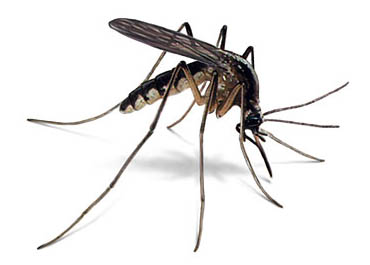
Another common orb is a white orb with a brown “face” like appearance within the orb, in Australia these can often be attributed to Mosquitoes, the smaller body of the mozzie creates less “feedback glow” from the flash but still makes an orb shape, and it's legs often create the illusion, combined with the torso, of a “face" within the orb itself.

For more on Pareidolia please visit our website here: Eidolon Paranormal


Many amateur ghost teams and spiritualists post photos of insects online claiming they are “Angels” or “fairies” when quite clearly they are insects, in some of the ones we have come across, even right here in Australia, they are clearly insects, such as moths and gnats.

Eidolon Paranormal is currently undertaking a survey in a local haunted “hotspot” where we are collecting insects at different times of the day/night and in different seasons, to establish the types of flying insects in the area. We are hoping to create an online database for our website, so people that visit the hotspot with little photography knowledge, thinking they have caught something paranormal, can then compare their photo's to our database and debunk their own paranormal photography themselves.


Photo's of our field trips to collect data will be posted at intervals over the coming months.
One of our Bug Catchers


I would like to thank "MidNite Walkers Paranormal Research Society"  for allowing us the use of some of their photographs for this particular blog


Allen Tiller © 2012

www.eidolonparanormal.com.au